
Lighting Designed for Function and Visibility
Interior & Exterior Lighting Installation in Manchester for homes needing better illumination, security coverage, or energy-efficient upgrades
New Hampshire winters bring limited daylight and extended darkness that demands reliable exterior lighting for walkways, entries, and property perimeters. Interior spaces with insufficient fixtures create dark corners, uneven task lighting, or reliance on portable lamps to compensate for inadequate overhead coverage. Ideal Electrical Services installs recessed lighting that provides even ceiling illumination without protruding fixtures, landscape lighting that highlights pathways and architectural features, and security lighting that activates when motion is detected along approach routes. The work addresses visibility gaps that create safety concerns and lighting layouts that fail to serve how spaces are actually used.
Recessed lighting installation involves cutting ceiling openings, running branch circuits to each fixture location, and mounting housing cans that position lamps flush with the ceiling surface. Landscape lighting requires burying low-voltage cable from transformers to fixture locations, positioning uplights and path lights where they illuminate walking surfaces without creating glare, and selecting fixtures rated for ground contact and moisture exposure. LED upgrades replace incandescent and fluorescent fixtures with solid-state lighting that delivers the same or better illumination while drawing a fraction of the power and generating far less heat.
Request a lighting assessment to identify which areas lack adequate illumination and where additional fixtures would improve function or security.
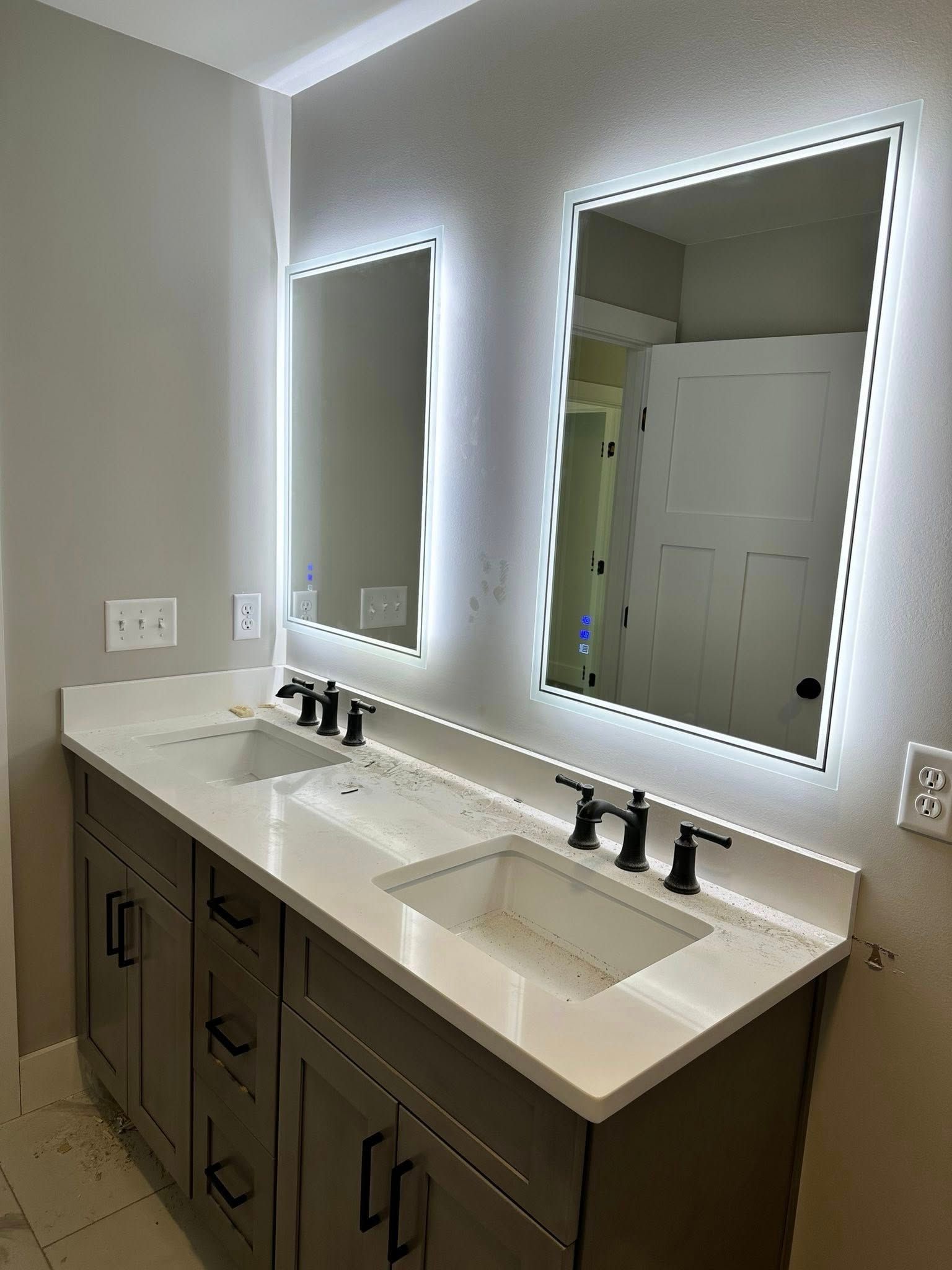
The Difference Between Adequate and Targeted Lighting
Accent lighting highlights specific features like artwork or architectural details using focused beams, while general ambient lighting provides overall room illumination through diffused sources. Security lighting installations include motion sensors that activate floodlights when movement is detected, photocells that turn lights on automatically at dusk, and fixture placement that eliminates shadowed hiding spots near entries. Energy-efficient lighting solutions combine LED technology with dimming controls and occupancy sensors that reduce runtime when spaces are unoccupied.
Once lighting installations are finished, rooms receive uniform illumination without dark zones or overly bright spots, exterior pathways are visible from entry to destination regardless of season or time, and security lighting activates reliably when needed without staying on unnecessarily during daylight. Task areas like kitchen counters gain focused lighting that eliminates shadows, and energy consumption drops measurably as LED fixtures replace older technology that generated more heat than visible light.
Interior and exterior lighting also includes selecting color temperatures appropriate for each space—warmer tones for living areas and cooler, brighter light for work zones. The fixture choices affect not just visibility but also how colors appear and whether spaces feel inviting or clinical.
Common Questions About This Service
Lighting installations raise questions about placement, fixture selection, and circuit requirements for Manchester properties.
What spacing works for recessed lighting in residential ceilings?
Recessed fixtures are typically spaced four to six feet apart in grid patterns for general lighting, with closer spacing in task areas and wider spacing in rooms where ambient illumination is sufficient, adjusted based on ceiling height and fixture beam angle.
How does landscape lighting wiring differ from interior circuits?
Landscape lighting typically uses low-voltage systems operating at 12 volts through step-down transformers, allowing safer burial without conduit in many cases, while interior circuits operate at full 120-volt household current and require different wiring methods.
When should existing lighting be upgraded to LED?
Upgrading to LED makes sense when replacing failed fixtures, when current lighting generates excessive heat in confined spaces, when energy costs justify the fixture investment, or when dimming capability and color control would improve functionality.
Why do some exterior lights require dedicated circuits?
High-wattage security floodlights, multiple landscape lighting transformers, or extensive holiday lighting displays often draw enough combined current to require dedicated circuits rather than sharing capacity with interior receptacle or lighting circuits.
What maintenance do outdoor lighting fixtures require?
Outdoor fixtures need periodic cleaning to remove dirt and debris that block light output, inspection of gaskets and seals that prevent moisture intrusion, and verification that burial connections remain secure and protected from ground moisture.
Ideal Electrical Services installs interior and exterior lighting that addresses specific visibility needs and improves how spaces function after dark. Arrange a consultation to review which areas would benefit from additional lighting or where energy-efficient upgrades would reduce operating costs.