
Charging Infrastructure That Matches Vehicle Needs
EV Charger Installation in Manchester for homeowners adding electric vehicles or upgrading from standard outlet charging
Charging an electric vehicle using a standard 120-volt outlet takes over 24 hours for many battery capacities, while a dedicated Level 2 charger on a 240-volt circuit delivers a full charge overnight. The difference matters for daily commutes and eliminates range anxiety caused by slow charging speeds. Ideal Electrical Services installs home charging stations in Manchester and Southern New Hampshire, running dedicated circuits from your panel to the charger location and ensuring the electrical system supports the continuous load that vehicle charging demands.
Installation begins with an electrical load assessment that calculates whether your panel has available capacity for a 30-amp, 40-amp, or 50-amp charging circuit without exceeding the service rating. The dedicated circuit installation involves running appropriately sized conductors through walls or conduit to the garage or exterior charger location, installing a breaker rated for continuous duty, and mounting the charging station where the cable reaches your vehicle's charge port. Level 2 charger installation typically uses 240-volt circuits similar to those powering electric dryers or ranges but requires different outlet configurations or hardwired connections depending on charger model specifications.
Arrange a load assessment to confirm your panel can support an EV charger circuit or whether a service upgrade is needed first.
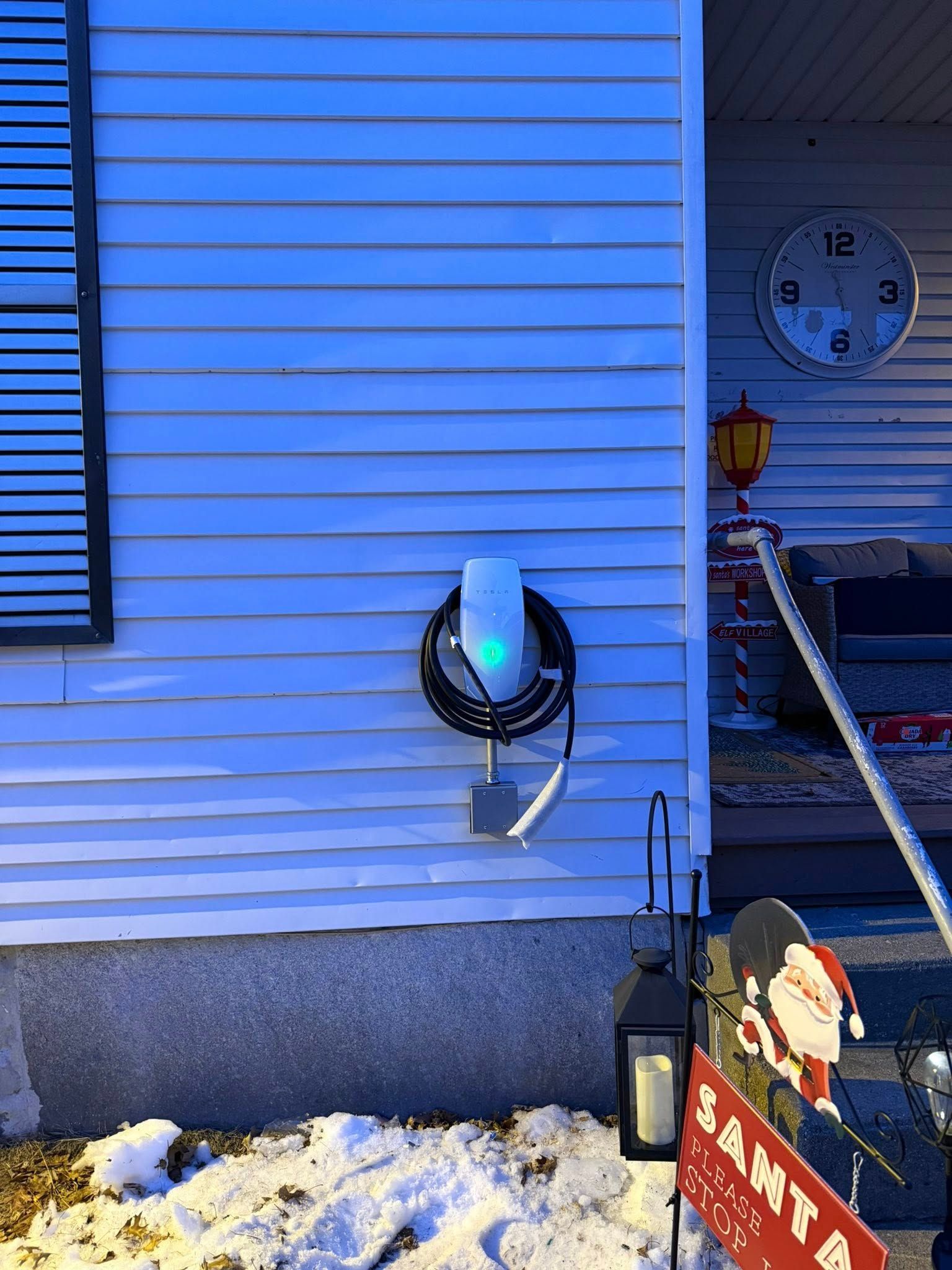
What Changes After Level 2 Charging Is Installed
Level 1 chargers operate on standard household circuits and deliver about four miles of range per hour of charging, while Level 2 chargers connected to 240-volt dedicated circuits deliver 25 to 35 miles of range per hour depending on amperage. The installation requires verifying that the charger's power draw remains within your panel's available capacity, especially if other large appliances run simultaneously. Charger upgrades and relocations involve moving existing charger circuits to new locations or replacing lower-amperage chargers with higher-capacity units as vehicle charging needs increase.
Once the installation is finished, your vehicle charges fully overnight from a depleted battery, the dedicated circuit prevents breaker trips that occur when sharing circuits with other high-draw devices, and the charger location provides convenient cable access without stretching cords across walkways. Charging speed no longer limits when you can use the vehicle, and the electrical system handles the continuous load safely without overheating connections.
Home charging stations also provide programmable features that take advantage of off-peak electricity rates and allow scheduling to avoid charging during peak demand periods. The dedicated circuit ensures that other household systems continue operating normally while the vehicle charges, eliminating the conflicts that arise when using shared circuits.
What Property Owners Usually Ask
EV charger installations raise questions about circuit requirements, charging speed, and panel capacity in Manchester homes.
What amperage circuit do most EV chargers require?
Most Level 2 home chargers operate on 40-amp or 50-amp circuits, though some compact models use 30-amp circuits, and the choice depends on your vehicle's onboard charger capacity and how quickly you need to replenish the battery.
How is available panel capacity calculated for charger circuits?
The calculation totals the amperage of all existing breakers, applies demand factors that account for non-simultaneous use, and compares the result to your panel's main breaker rating to determine whether adding a charger circuit exceeds safe capacity limits.
When does a charger installation require a panel upgrade?
A panel upgrade is needed when the existing service lacks physical breaker spaces for a new circuit, when adding the charger's continuous load would exceed 80 percent of the panel's rated capacity, or when the panel is outdated and cannot accommodate modern breaker types.
Why do some chargers require hardwired connections instead of outlets?
Hardwired installations eliminate the outlet connection point that can loosen over time under continuous high-current loads, and certain high-amperage chargers exceed the rating of standard outlet configurations, requiring direct connection to the circuit wiring.
What documentation does the installation include?
The installation provides a record of circuit amperage, breaker location, wire gauge used, and charger specifications, which matters for future electrical work, home sales, or warranty claims on the charging equipment.
Ideal Electrical Services installs EV chargers with dedicated circuits sized correctly for your vehicle and household electrical system. Schedule a site evaluation to determine charger placement and verify that your panel supports the required circuit addition.