
Electrical Systems Built for Decades of Use
Home Wiring & Rewiring Services in Manchester for properties with outdated systems that no longer support modern electrical loads
Homes built before 1980 often contain wiring systems designed for electrical loads one-third of what households now demand, with 60-amp or 100-amp service panels, ungrounded outlets, and aluminum branch circuits that expand and contract with temperature changes, loosening connections and creating fire hazards at terminals. Ideal Electrical Services rewires homes across Manchester and Southern New Hampshire, replacing outdated systems with 200-amp service, grounded circuits in every room, and arc-fault breakers that detect the electrical arcing that precedes most residential fires. Whole-home rewiring involves pulling new cable through walls, installing updated panels with sufficient breaker spaces for current and future needs, and ensuring every circuit meets National Electrical Code requirements that have evolved significantly since older homes were constructed.
Rewiring starts with load calculations to determine service capacity, followed by panel replacement, circuit routing through existing walls or attics, and installation of grounded receptacles, GFCI protection in wet locations, and AFCI breakers on bedroom and living area circuits. New construction wiring follows similar principles but allows circuits to be routed before walls are closed, simplifying installation and allowing for optimal placement of outlets, switches, and junction boxes.
Arrange an electrical assessment to identify circuits that no longer meet code or capacity requirements before planning your rewiring project.
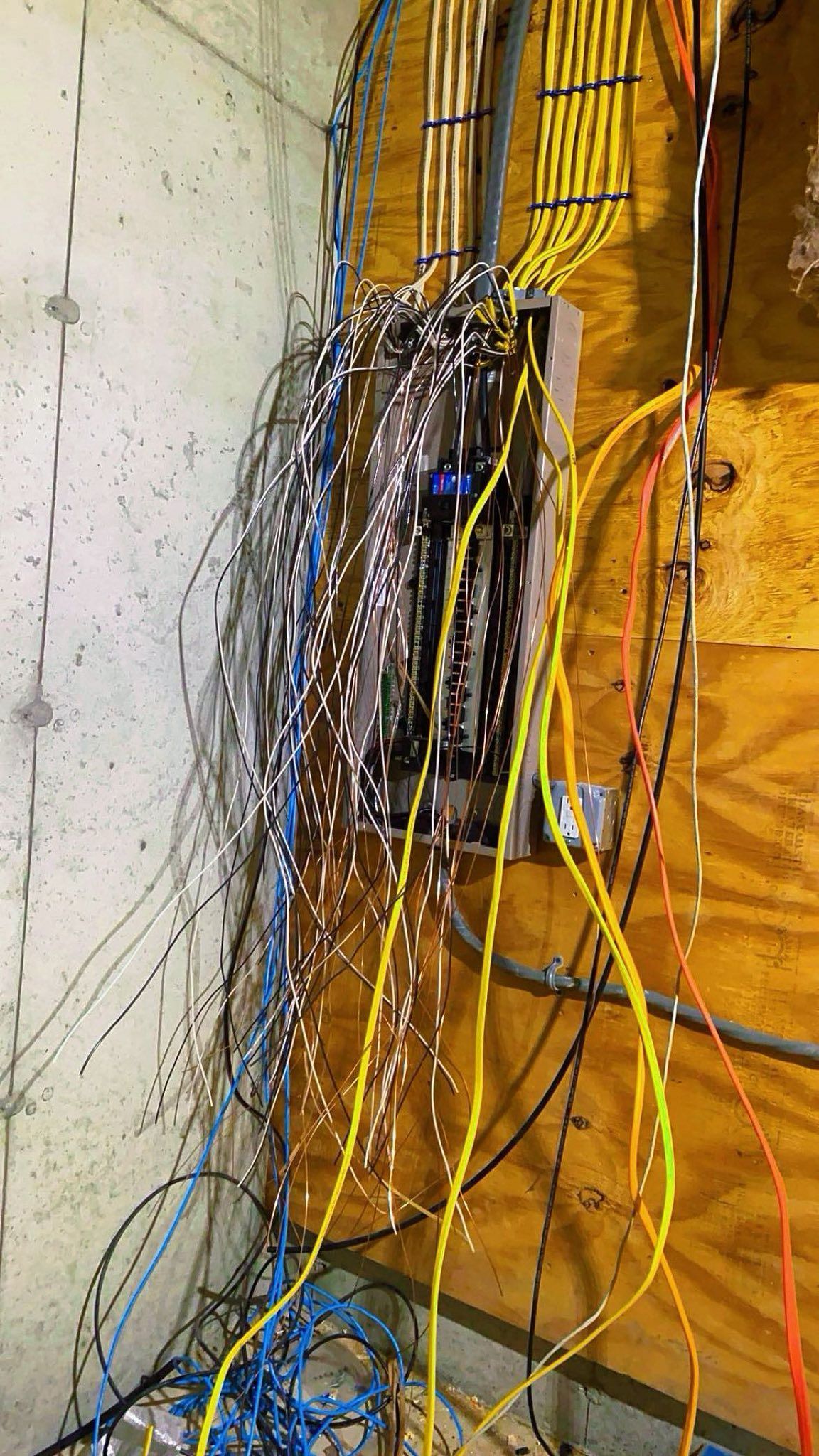
What Changes After Electrical Systems Are Updated
Rewiring eliminates the overheating that occurs when old circuits carry loads beyond their rated capacity, replacing 14-gauge wire on 15-amp circuits with appropriately sized conductors and breakers matched to the loads they serve. Basement and garage wiring adds circuits where extension cords previously ran across floors, and room additions receive dedicated circuits rather than tapping into existing overloaded lines.
Once rewiring is complete, breakers stop tripping when multiple appliances run simultaneously, outlets deliver consistent voltage without dimming lights when motors start, and devices plugged into grounded receptacles gain protection against surges and faults that older two-prong outlets couldn't provide. You'll also notice that GFCI outlets in kitchens and bathrooms reset reliably after tripping, and arc-fault breakers remain set unless they detect the specific high-frequency signatures of damaged wire insulation or loose connections.
Older homes sometimes retain knob-and-tube wiring in attics or walls, a system that lacks grounding conductors and uses porcelain insulators to keep wires separated from framing. Insurance companies often refuse coverage or charge higher premiums for homes with knob-and-tube wiring still in service, making rewiring a prerequisite for obtaining affordable homeowner's insurance in many cases.
Answers to Frequent Service Questions
Rewiring decisions depend on the age of your home, the condition of existing circuits, and whether you're planning renovations that require walls to be opened anyway.
What indicates a home needs rewiring?
Frequent breaker trips, outlets that spark or feel warm to the touch, flickering lights when appliances cycle on, two-prong outlets throughout the house, and visible wire insulation that's brittle or cracked all indicate wiring that no longer meets safety standards. Homes built before 1970 often require at least partial rewiring to support modern loads and gain grounding on all circuits.
How is rewiring done without destroying walls?
Wiring can often be routed through basements, attics, and crawl spaces to minimize wall penetrations, with cables fished through existing stud bays using flexible rods and pulling techniques. Strategic access holes are cut near outlets and switches, then patched after wire is pulled, though complete rewiring of finished spaces typically requires some drywall repair and repainting once electrical work is inspected and approved.
When should electrical panels be replaced during rewiring?
Panels with rust, scorch marks, or insufficient breaker spaces should be replaced as part of any rewiring project, and homes upgrading to 200-amp service require new panels regardless of existing panel condition. Manchester properties with Federal Pacific or Zinsco panels—brands known for breaker failures—should prioritize panel replacement even if rewiring is deferred, as these panels present documented fire hazards.
What's included in garage or basement wiring?
Garage circuits typically include 20-amp receptacle circuits with GFCI protection, dedicated circuits for door openers, and lighting circuits controlled from multiple locations. Basement wiring adds circuits for workshop areas, laundry equipment, and future finishing, with outlets spaced to eliminate the need for extension cords and lighting designed to provide adequate illumination in areas used for storage or work.
How does new construction wiring differ from rewiring?
New construction allows circuits to be installed before drywall, making it easier to route cables, install boxes at optimal heights, and provide circuits exactly where needed without fishing wire through finished walls. Load planning happens during the rough-in phase, ensuring sufficient circuits for kitchen appliances, HVAC systems, and future needs before walls are closed and access becomes limited.
Ideal Electrical Services completes home wiring and rewiring projects across Manchester and Southern New Hampshire, from single-room additions to whole-home electrical upgrades that bring older properties up to current code standards. Contact us to schedule a detailed inspection and develop a wiring plan based on your home's specific needs and existing system condition.