
Panels Built for Today's Electrical Load
Electrical Panel Upgrades & Replacement in Manchester for homes with outdated fuse boxes, insufficient capacity, or panels that fail to meet code
Homes with fuse boxes or panels rated below 100 amps struggle to support modern appliances, electric vehicle chargers, and HVAC systems that draw significant current simultaneously. A breaker trips when you run the dryer and microwave together, or the panel itself shows rust, scorching around breaker connections, or bus bars that no longer grip breakers securely. Ideal Electrical Services replaces panels that lack capacity for current household demand and upgrades service entries to meet electrical code requirements in Manchester and Southern New Hampshire.
Panel replacement begins with disconnecting power at the meter, removing the old panel from the wall, and installing a new breaker panel with sufficient spaces and amperage rating for all existing circuits plus future additions. Fuse box conversions involve transitioning from screw-in fuses to circuit breakers, which provide more precise overcurrent protection and eliminate the need to replace fuses after every trip. Service upgrades often require coordinating with the utility company to install a higher-capacity meter base and ensuring the service entrance conductors are sized correctly for the new panel rating.
Request a panel evaluation to determine whether your current service capacity supports planned appliance or charger installations.
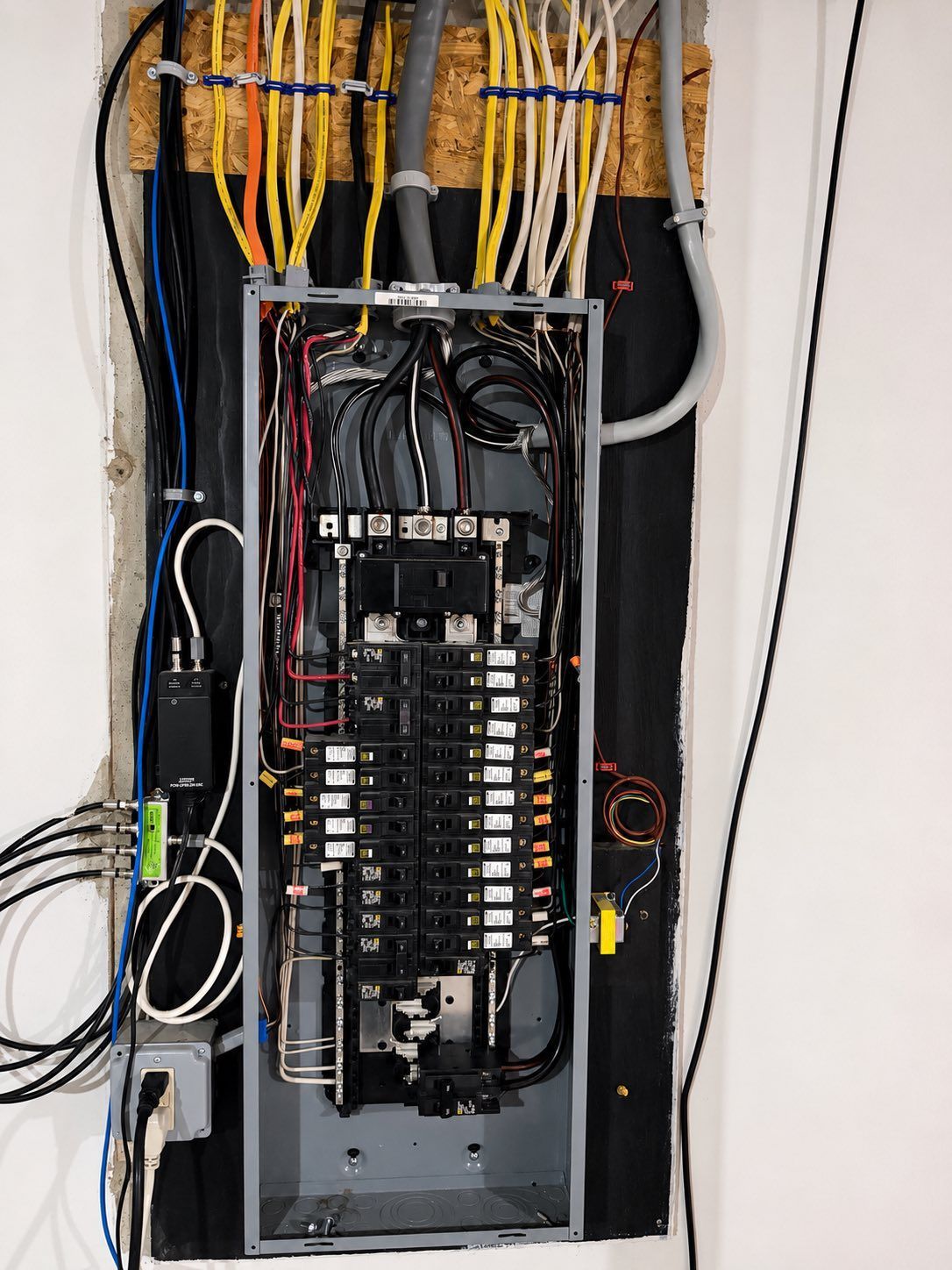
How Panel Upgrades Address Capacity Limits
The upgrade process involves calculating total connected load across all circuits, identifying which breakers protect critical systems, and mapping out how circuits will be organized in the new panel. Every circuit wire is inspected for damage before reconnection, and any conductors with compromised insulation are replaced during the panel swap. Breaker panel installations include installing an appropriately rated main breaker, ensuring proper grounding and bonding connections, and verifying that neutral and ground bars are configured correctly to prevent dangerous fault paths.
After the panel upgrade completes, your electrical system distributes power reliably without tripping breakers under normal simultaneous loads, supports additional circuits for new appliances or chargers without requiring further service increases, and provides labeled breaker positions that clearly identify which circuit controls each area of the home. The panel operates cooler because properly sized breakers and tight connections eliminate resistance that causes heat buildup.
Service upgrades also prepare homes for future electrical needs by providing available breaker spaces and amperage capacity that accommodate heat pumps, central air conditioning, or additional Level 2 EV chargers without requiring another panel replacement. The work ensures compliance with current code, which often requires arc-fault and ground-fault protection on specific circuits.
Common Questions About This Service
Understanding what panel upgrades involve helps homeowners plan for electrical improvements and capacity needs.
What capacity upgrade do most homes need?
Many older homes in Manchester have 60-amp or 100-amp service, while modern households typically require 200-amp service to support central air, electric ranges, dryers, water heaters, and vehicle chargers without overloading the panel.
How does a breaker panel differ from a fuse box functionally?
Breaker panels use resettable switches that trip when current exceeds their rating, while fuse boxes require replacing a blown fuse element each time, and fuses provide less precise overcurrent protection than modern circuit breakers.
When is a service upgrade required versus just a panel replacement?
A service upgrade is required when the existing service entrance conductors and meter base are rated below the desired panel capacity, which involves utility coordination and replacing the mast, weatherhead, and meter socket.
Why do some panels fail electrical inspections?
Panels fail inspections when they lack proper grounding, use breakers incompatible with the panel bus design, contain double-tapped breakers where two wires connect to a single breaker terminal not rated for that configuration, or show physical damage like rust or burn marks.
What happens to existing circuits during panel replacement?
Every existing circuit is disconnected from the old panel, inspected for damage, and reconnected to appropriately sized breakers in the new panel, maintaining the same routing through the home but gaining the protection and capacity advantages of modern equipment.
Ideal Electrical Services handles panel replacements and service upgrades that provide the capacity and safety modern homes require. Contact us to assess whether your current panel meets household electrical demand and code compliance standards.