
Power That Stays On When Utilities Fail
Generator Installation & Backup Power Solutions in Manchester for homes and businesses where extended outages disrupt essential systems
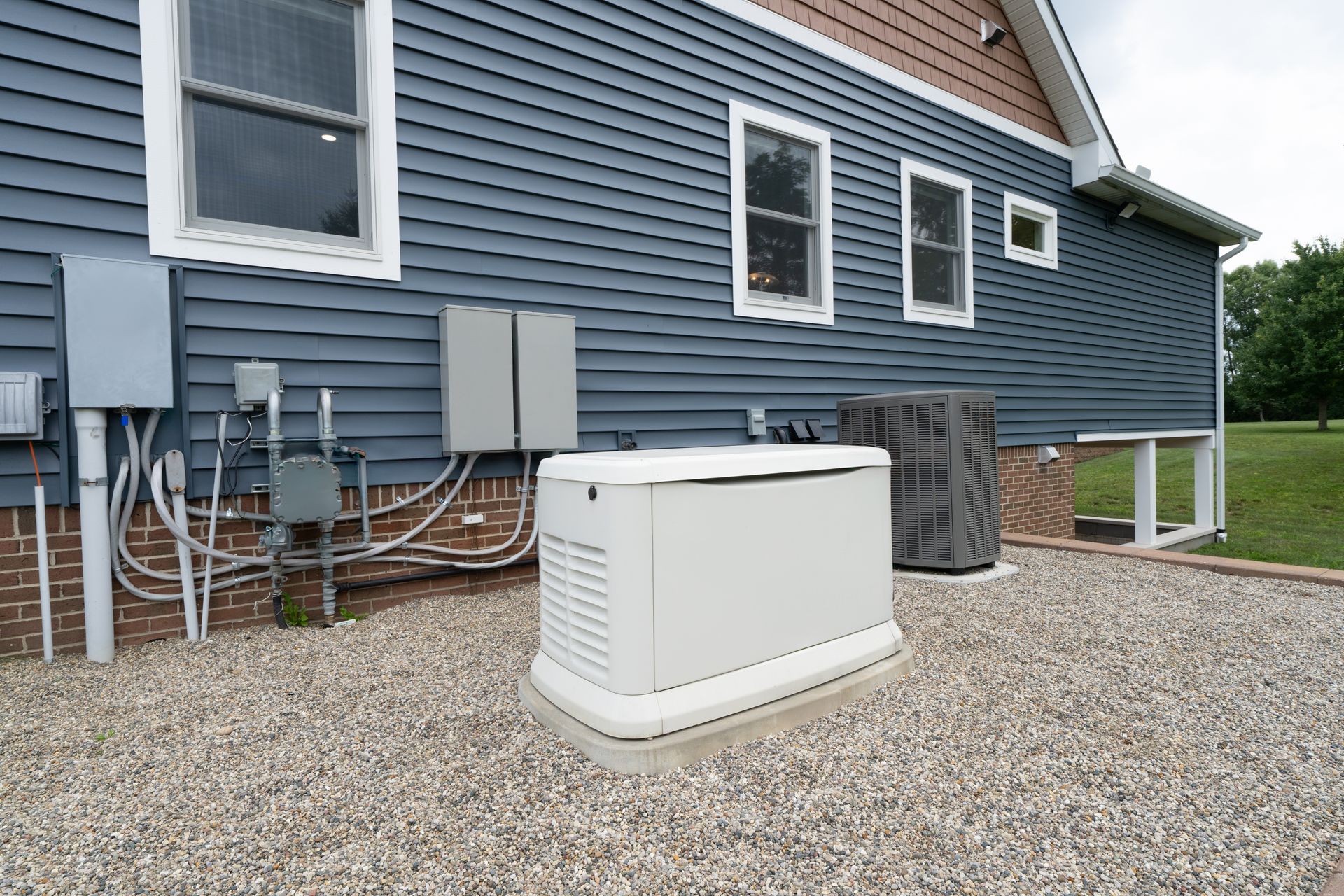
New Hampshire winter storms and summer thunderstorms regularly knock out power for hours or days, leaving homes without heat, refrigeration, or well pumps and forcing businesses to close until utility crews restore service. Standby generators detect outages within seconds, start automatically, and supply power to circuits designated as essential—furnaces, refrigerators, well pumps, lighting, and outlets needed to maintain basic operations. Ideal Electrical Services installs whole-home and commercial backup power systems across Manchester and Southern New Hampshire, connecting standby generators to automatic transfer switches that isolate generator power from utility lines and route it safely to designated circuits. Generator installations require load calculations to size the unit correctly, concrete pads positioned for ventilation and noise considerations, natural gas or propane fuel lines run to the generator location, and transfer switches wired to prevent backfeeding power onto utility lines where it could injure lineworkers attempting repairs.
Generator systems include a standby unit installed outdoors, an automatic transfer switch mounted near the main panel, and electrical connections that allow the generator to power selected circuits when utility voltage drops below operating thresholds. Load calculations determine generator size based on starting wattage of motors and compressors, continuous wattage of resistive loads like heaters and lighting, and whether the system will power the entire home or only critical circuits selected through a load center.
Request a backup power consultation to evaluate your essential circuits and determine the generator capacity required for your property.
What Backup Power Planning Requires
Transfer switches monitor utility voltage continuously and signal the generator to start when voltage drops or disappears entirely, then transfer the electrical load from utility power to generator power once the generator reaches operating speed and voltage stabilizes. Whole-home systems power every circuit, while load-managed systems prioritize essential circuits and shed non-critical loads to allow smaller generators to handle homes with high total amperage. Fuel sources matter—natural gas generators connect to existing utility gas lines and run indefinitely during outages, while propane generators require tanks sized to provide several days of runtime at expected load levels.
Once installed and commissioned, the generator runs through weekly self-tests to verify readiness, starts automatically within ten seconds of detecting an outage, and powers your selected circuits until utility service is restored. You'll notice that lights stay on, heating systems continue running, refrigerators maintain temperature, and well pumps supply water without interruption. When utility power returns, the transfer switch shifts the load back to utility lines, runs the generator briefly to cool down, and then shuts it off until the next outage or scheduled test.
Generator sizing involves calculating starting surge for motors—a well pump might run at 1,000 watts but require 3,000 watts for the two seconds it takes to start—and ensuring the generator can handle the combined load when multiple systems start simultaneously. Undersized generators overload and shut down, while properly sized units run at 60–80% capacity, which maximizes fuel efficiency and extends engine life between service intervals.
Common Questions About This Service
Generator decisions depend on which systems you consider essential, how long outages typically last in your area, and whether you're willing to manage loads manually or prefer fully automatic operation.
What size generator does a home need?
Whole-home generators for typical Manchester properties range from 14 kilowatts for smaller homes with gas heat to 26 kilowatts or larger for homes with electric heat, central air conditioning, well pumps, and multiple large appliances. Load calculations account for starting surge of motors, continuous draw of heating and cooling equipment, and whether you'll run all systems simultaneously or shed non-essential loads during outages.
How does a transfer switch work?
Automatic transfer switches contain contactors that physically disconnect utility power and connect generator power to your circuits, controlled by sensors that monitor utility voltage and generator status. The switch prevents generator power from backfeeding onto utility lines, which is both illegal and dangerous, and ensures that generator power only flows when the generator is running at proper voltage and frequency. Manual transfer switches require you to physically throw a lever to switch between utility and generator power, which costs less but demands that you're home when outages occur.
When should generators be installed in relation to utility service?
Generator installations happen after the main electrical service is in place and operational, since the transfer switch connects between the utility meter and your main panel or subpanel. New construction allows generator provisions to be planned during electrical design, with conduit stubbed out to the generator location and a concrete pad poured during site work. Retrofit installations require more coordination to minimize disruption, but the transfer switch can usually be mounted adjacent to existing panels without major electrical system modifications.
What fuel source is best for backup generators?
Natural gas generators connect to utility gas lines and run indefinitely during outages, but service may be interrupted if gas lines are damaged in the same event that caused the power failure. Propane generators require on-site storage tanks, typically 250 to 500 gallons for residential systems, and provide fuel independence but require periodic tank refills and monitoring of fuel levels to ensure adequate supply before winter storm season.
How often do generators require maintenance?
Standby generators need annual maintenance that includes oil and filter changes, spark plug replacement, battery testing, and verification that the transfer switch operates correctly through all phases of a simulated power failure. Weekly self-tests run the generator for 15 minutes to circulate oil, charge the battery, and verify that all systems are ready for the next outage, but these tests don't load the generator enough to count as exercise under full operating conditions.
Ideal Electrical Services installs standby generators and automatic transfer switches for residential and commercial clients throughout Manchester and Southern New Hampshire, including load analysis, permitting, fuel line coordination, and commissioning to verify proper operation before the next outage. Schedule a planning session to review your backup power needs and develop a system design that keeps your essential circuits running when utility service fails.